
When you’re selling $500+ products through a dropshipping model, your brand identity isn’t just important—it’s everything. Premium buyers don’t impulse-purchase expensive items from stores that feel generic or untrustworthy. They need confidence that your business is legitimate, professional, and worth their investment.
The challenge? Most high-ticket dropshippers focus so heavily on finding the right products and suppliers that they treat branding as an afterthought. That’s a costly mistake. Your brand is what transforms a skeptical visitor into a paying customer willing to drop thousands of dollars on a product they can’t touch before buying.

The Premium Buyer’s Trust Calculation
High-ticket customers think differently from bargain hunters. They’re not comparison shopping based solely on price—they’re evaluating risk. Every element of your store either builds or erodes trust. A generic store name, inconsistent visual identity, or amateur-looking logo sends immediate red flags that you’re not a serious business.
I’ve seen dropshippers spend weeks perfecting their product descriptions and ad targeting, only to lose conversions because their store name sounds like a randomly generated placeholder. Your business name needs to communicate professionalism, specificity, and credibility. It should hint at your niche without being so narrow that it boxes you in as you scale.
When brainstorming names, many entrepreneurs get stuck in analysis paralysis, cycling through hundreds of combinations that all sound similar. An AI name generator can help break through that creative block by suggesting unexpected combinations you wouldn’t naturally think of. The key is to use generated ideas as inspiration rather than accepting them verbatim—combine elements, modify endings, or use them to spark completely new directions.
The Uniqueness Factor: Standing Out in Luxury Markets
Here’s a trap I see constantly: dropshippers find a great name, invest in branding, build out their store, and then discover three established competitors with nearly identical names. In high-ticket markets where trust is paramount, name confusion is deadly. If a customer searches your business name and finds someone else, you’ve lost them.
Before committing to any name, you need to validate its uniqueness. This goes beyond checking domain availability. How many similar business names actually exist in your space? Are there competitors who own the social handles? Is someone else ranking for that exact phrase? This competitive intelligence step saves you from expensive rebranding later.
Differentiation isn’t just about avoiding legal issues—it’s about carving out a distinct market position. When every other high-ticket home decor store has “luxury” or “elite” in its name, standing out means zigging where others zag. Your name should make someone pause and think, “That’s different.”
Visual Identity: The Logo Matters More Than You Think
For high-ticket products, your logo appears at critical trust-building moments: in ads, on packaging, on invoices, in customer support emails. A professional logo signals that you’re a legitimate business that cares about details. A cheap or missing logo suggests you’re a fly-by-night operation.
Many dropshippers waste money on expensive designers before validating their business concept, or worse, they go live with no logo at all. There’s a middle ground: using modern AI-powered tools to create professional brand assets lets you test market fit without premature investment. You can always upgrade to a custom design once revenue proves the concept.
The visual identity extends beyond the logo. Your color palette, typography, and imagery style should consistently communicate premium quality. If you’re selling $2,000 furniture, your aesthetic shouldn’t look like a dollar store flyer. Every pixel either reinforces or undermines your positioning.
Brand Consistency Across Customer Touchpoints
Trust compounds through consistency. Your brand voice in ads should match your website copy, which should align with your email communications and social media presence. When something feels off—like professional product photos paired with typo-filled descriptions—customers notice and hesitate.
Create a simple brand guidelines document for yourself: approved colors (with hex codes), fonts, logo usage rules, and tone of voice examples. This becomes invaluable when you’re tired at midnight responding to a customer inquiry. You’ll default to your documented standards rather than making inconsistent decisions that erode brand equity.
Premium customers are also savvier about researching businesses. They’ll look up reviews, check social media, and verify your business details. Having consistent information across all platforms—same business name, matching visuals, coherent messaging—builds the foundational trust that high-ticket purchases require.
Positioning: You’re Not Selling Products, You’re Solving Premium Problems
The most successful high-ticket dropshippers understand they’re not competing on price—they’re competing on specialized expertise and superior service. Your branding should reflect this positioning. Instead of “We sell outdoor furniture,” it’s “We curate commercial-grade outdoor living solutions for discerning homeowners who refuse to compromise.”
This positioning influences everything: how you describe products, what guarantees you offer, how you handle customer service, and even your shipping presentation. When someone pays $1,500 for a patio set, they expect white-glove treatment. Your brand needs to promise and deliver that elevated experience.
Don’t be afraid to narrow your positioning. “High-ticket furniture dropshipper” isn’t a brand—it’s a business model. “The premier source for sustainable teak outdoor furniture” is a brand. Specificity attracts the right customers and repels tire-kickers who were never going to buy anyway.
Building Social Proof Before You Have It
Here’s the cold start problem: high-ticket buyers want proof of satisfied customers, but you need buyers to create that proof. Smart branding can bridge this gap. Start with process credibility: detailed about pages explaining your expertise, quality assurance process, partnership with premium suppliers, and customer service commitments.
Invest in content that demonstrates knowledge. Blog posts, buying guides, comparison articles, and educational resources position you as an authority. When a customer sees you’ve published thoughtful content about their exact purchase consideration, you’re no longer just another dropshipper—you’re a trusted advisor.
Partner with micro-influencers in your niche early. A single testimonial from a respected voice in your space carries more weight than fifty anonymous reviews. These relationships also provide content opportunities and expand your reach to audiences already interested in premium products.
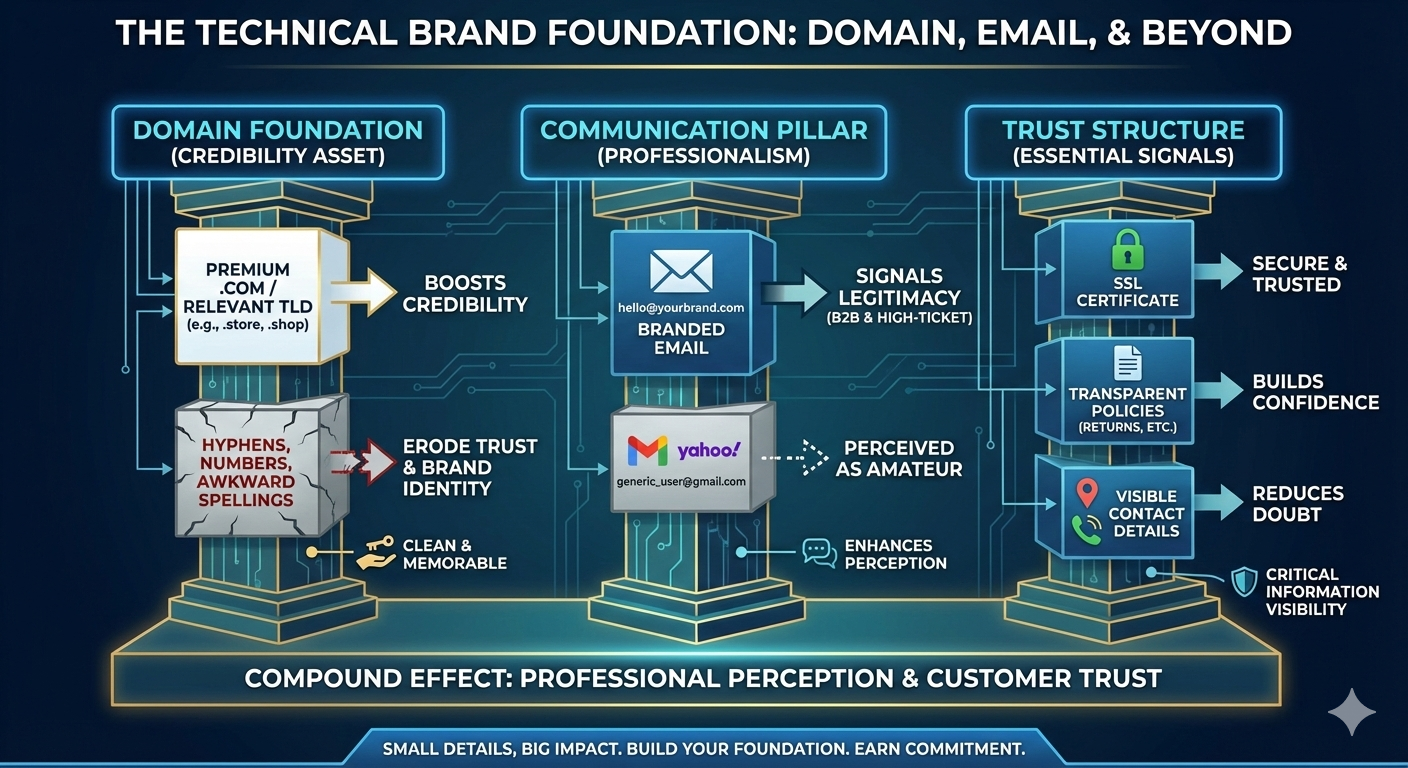
The Technical Brand Foundation: Domain, Email, and Beyond
-
Your domain name is a core brand asset, not a technical afterthought. Choosing a clean, premium domain—ideally a strong
.comor a relevant TLD like.storeor.shop—immediately boosts credibility. -
Domains filled with hyphens, numbers, or awkward spellings quietly erode trust. If your ideal
.comis taken, it’s better to explore smart variations or alternative TLD strategies than to dilute your brand identity. -
Professional email addresses (such as
hello@yourbrand.com) matter far more than most people realize. Compared to free providers like Gmail or Yahoo, branded emails signal legitimacy—especially in B2B and high-ticket sales environments. -
These seemingly small details compound into a larger perception of professionalism. Customers may not consciously notice them, but they absolutely feel the difference.
-
Trust signals like SSL certificates, transparent return policies, and clearly visible contact details are essential. Premium buyers actively look for these cues before committing.
-
Never hide critical information. Make your business location, contact methods, and policies easy to find—forcing customers to search creates doubt at the exact moment you need confidence.
Evolving Your Brand Without Losing Identity
As your high-ticket dropshipping business grows, your understanding of your ideal customer will sharpen. Your brand should evolve to better serve them, but radical reinvention confuses existing customers and wastes brand equity you’ve built.
Plan for growth from the start. Choose names and visual identities that can stretch as you expand product lines or move upmarket. If you’re “The Minimalist Desk Store” today but want to sell entire office setups tomorrow, you’ve limited yourself. Better to be “Studio Space” and have room to grow.
Seasonal refreshes—updating imagery, refining messaging, introducing new visual elements—keep your brand feeling current without abandoning recognition. The core identity remains stable while the expression adapts. Think of luxury fashion brands: their fundamental identity is consistent over decades, but collections evolve with trends.
The Bottom Line on Branding for High-Ticket Success
In high-ticket dropshipping, your brand is your moat. Products can be replicated, pricing can be matched, but a strong brand identity built on trust, consistency, and expertise is defensible. Premium buyers aren’t looking for the cheapest option—they’re looking for the right option from a source they trust.
Invest time in getting your brand foundation right before you scale. A strong name, professional visual identity, clear positioning, and consistent execution across all touchpoints aren’t optional extras—they’re the infrastructure that supports sustainable high-ticket sales. Skip these fundamentals, and you’ll constantly struggle to convert browsers into buyers no matter how great your products are.
Your brand is a promise. Make it compelling, make it credible, and deliver on it every single time. That’s how you build a high-ticket dropshipping business that doesn’t just make sales, but builds lasting customer relationships that generate referrals, repeat purchases, and the kind of organic growth that transforms dropshipping from a side hustle into a real business.